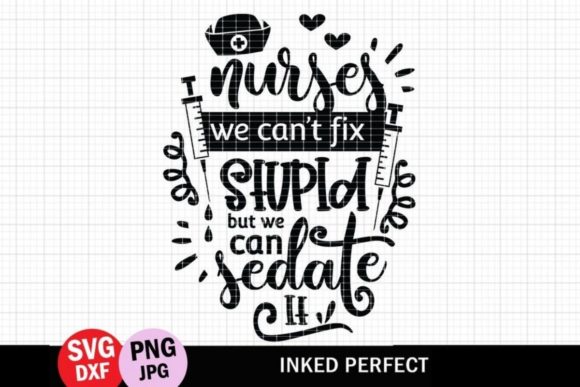
Review: Nurses Can’t Fix Stupid Embroidery Design
As a designer who has spent years digitizing and reviewing embroidery assets for small businesses, I approach every new machine embroidery design with a critical eye. It is not just about whether the image looks cute on a screen; it is about how those stitches will behave under the needle, how the thread interacts with the fabric, and whether the final finished product will hold up to real-world wear. Recently, I evaluated the Nurses Can t Fix Stupid but We Can Sedate It graphic, a piece that falls squarely into the humor and lifestyle category of Crafts and Graphics. This review breaks down its practical application for Etsy sellers, craft business owners, and hobbyists looking to create high-quality custom apparel.
First Impressions and Visual Personality
The immediate appeal of this design lies in its relatable humor. The phrase "Nurses Can t Fix Stupid, But We Can Sedate It" captures a specific niche of medical professional wit that resonates deeply with its target audience. Visually, the composition balances text with iconic imagery, including syringes and a nurse’s hat. For an embroidery project, this mix of typography and illustrative elements requires careful attention. The mood is playful yet professional enough for casual workwear or gift items. When I first loaded the digital embroidery file into my simulation software, the layout appeared balanced, but the density of the syringe details demanded a closer look. This is not a simple running stitch outline; it likely utilizes a combination of fill stitch for the larger shapes and potentially satin stitch for finer borders, depending on the digitizer’s choices.
Real-World Application Scenarios
To truly understand the value of this asset, I imagined several production scenarios. The most obvious application is a sweatshirt embroidery project. A heather grey or navy crewneck provides an excellent canvas for the white and bright accent threads often used in medical-themed designs. The humor lands well here, making it a perfect personalized gift for Nurse’s Week or a birthday. However, I also considered its use on a sturdy cotton tote bag design. Here, the durability of the stitching becomes paramount. If the design is intended for a handmade product sold at craft fairs, it must withstand the friction of daily use. Another viable option is an embroidered patch. By adding a merrowed edge or a simple satin border, this design can be transformed into a versatile accessory that nurses can attach to scrub caps or bags, expanding its utility beyond a single garment.
Considerations for Small Hoops and Curved Surfaces
While the design is charming, its complexity poses challenges on smaller scales. If you are attempting to place this on a cap or a baby item, you must verify the hoop size requirements. Detailed corners in the lettering and the fine lines of the syringes can become muddy if scaled down too aggressively. On curved surfaces like baseball caps, registration issues may arise if the stitch density is too high, causing the fabric to pucker. I recommend testing the design on scrap fabric that mimics the curvature of your final product. For baby embroidery, ensure that the back of the stitching is covered with a soft backing, as sensitive skin cannot tolerate rough cut-away stabilizers or dense fill areas.
Fabric and Thread Interactions
The success of this embroidery project heavily depends on material selection. On textured fabrics like terry cloth towels or fleece, the finer details of the nurse’s hat and syringes might get lost. In such cases, increasing the stitch count or simplifying the design through applique techniques could be necessary. Conversely, on smooth, high-thread-count cotton or performance scrubs, the design should pop with clarity. Thread color contrast is crucial. Since the quote relies on readability, using a high-contrast thread against the fabric background is non-negotiable. I advise creating black and white mockups to test legibility before committing to colorful threads. If you are using dark fabric, ensure your digitizer has included proper underlay stitches to prevent the fabric color from showing through the lighter top threads.
Stabilizer and Technical Execution
No matter how skilled the machine operator, the right stabilizer is the backbone of a professional result. For this design, which likely contains moderate to heavy density due to the filled shapes, a medium-weight cut-away stabilizer is generally safer than tear-away, especially for garments that will be washed frequently. Stretchy fabrics, common in modern scrubs and athletic wear, require extra stabilization to prevent distortion. Always hoop your fabric tightly and consider using a topping spray if working with plush materials to keep the stitches sitting on top of the pile rather than sinking in. These technical steps distinguish a amateur small shop product from a boutique-quality item that builds customer trust.
Commercial Viability and Brand Consistency
For commercial embroidery professionals and Etsy sellers, this design offers strong marketability. Humor sells, particularly when it validates the hard work of healthcare professionals. However, before listing this as a design asset or selling finished items, you must confirm the licensing terms. Not all digital embroidery file purchases include commercial rights. Check the provider’s documentation carefully. Assuming commercial use is permitted, this design fits well within a broader collection of medical-themed printable mockup portfolios or physical inventory. It enhances brand consistency if your shop specializes in witty, profession-specific gifts. The key is presentation. High-quality photos of the stitched out design on various items, such as aprons or pillow covers, will drive buyer engagement more than a digital screenshot ever could.
Final Designer Notes
Before launching this into your production line, perform a test stitch-out. Inspect the small details of the syringes for thread breaks or jumps. Verify that the lettering is crisp and that there are no excessive trims that could weaken the structure. Compare the result on both light and dark fabrics to ensure versatility. If the design includes very tiny text, consider whether it needs simplification for smaller hoop sizes. Remember, the goal is to create a holiday embroidery gift or everyday item that feels durable and well-crafted. By paying attention to these practical details, you transform a simple graphic into a valuable custom apparel piece that customers will appreciate and wear with pride. This design, when executed with care, serves as a testament to the blend of humor and skill that defines the best in handmade crafts.