Reviewing You Get Socks if You Stop Believing
As an embroidery designer who has spent years digitizing patterns and critiquing design assets for real-world application, I approach every new file with a critical eye. It is not enough for a graphic to look cute on a screen; it must translate flawlessly into thread. Recently, I evaluated the You Get Socks if You Stop Believing design to determine its viability for commercial and personal projects. This piece falls squarely into the Crafts category, offering a whimsical twist on holiday tropes that appeals to modern makers. My goal here is to provide a practical assessment of how this machine embroidery design performs when moved from digital concept to tangible finished product.
First Impressions and Visual Personality
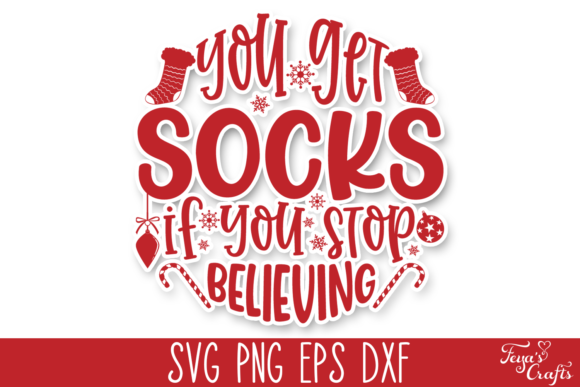
The immediate appeal of You Get Socks if You Stop Believing lies in its playful subversion of traditional holiday messaging. Instead of the usual sentimental quotes, this design offers humor, which is a significant driver in today’s Etsy seller market. Visually, the layout appears balanced, likely utilizing a mix of typography and illustrative elements. For a designer, the key question is always about legibility and flow. Does the text dominate, or do the graphics overpower the message? In this case, the interplay suggests a design meant to be read clearly, making it ideal for items where the viewer is at a conversational distance, such as tote bags or aprons.
The mood is lighthearted and ironic, fitting perfectly for customers who appreciate dry humor in their personalized gift choices. When evaluating the Graphics provided in the ZIP file, I look for clean lines and logical color separation. A cluttered design can lead to stitching errors, but this concept seems to rely on strong shapes rather than excessive detail, which is a positive indicator for stitch-out success.
Real-World Application: The Holiday Tote Scenario
To truly test the versatility of this design, I imagined a specific use case: creating a set of reusable grocery totes for a boutique holiday collection. The You Get Socks if You Stop Believing quote works exceptionally well on a canvas tote bag design. Canvas provides a stable surface that supports various stitch types without excessive puckering. In this scenario, the design would serve as the central focal point. I envision using a bold satin stitch for the main lettering to give it a raised, premium feel, while employing a fill stitch for any accompanying sock illustrations to add texture and depth.
This application highlights the design’s strength as a conversation starter. For a small shop product, uniqueness is currency. A customer browsing a craft fair is more likely to pause at a humorous, well-executed piece than a generic snowflake. The design’s inherent wit adds value beyond the thread cost, allowing the maker to position the item as a premium handmade product rather than a commodity.
Apparel and Custom Wearables
Beyond accessories, this design shines in custom apparel. Consider a crewneck sweatshirt. Sweatshirt embroidery requires careful attention to stitch density because the fabric is thick and often fuzzy. If the design is too dense, it can create a stiff, uncomfortable patch on the chest. However, if the digitization is optimized with appropriate underlay and spacing, the result is professional and durable. I would recommend placing this design on the left chest for a subtle look or centered on the back for a bold statement piece. The humor translates well to adult-sized garments, appealing to those who want festive attire without being overly saccharine.
For baby embroidery projects, caution is advised. While the theme is family-friendly, the text length might be too small for infant clothing unless scaled significantly. Tiny lettering can become illegible if the thread colors do not contrast sharply with the fabric. If used on a onesie, I would suggest simplifying the design or focusing only on the graphical element, ensuring the hoop size accommodates the necessary detail without crowding the garment.
Technical Considerations for Stitching Success
Every designer knows that the difference between a amateur look and a professional finish lies in the technical execution. When working with You Get Socks if You Stop Believing, several factors must be managed. First, consider the fabric texture. On textured fabrics like terry cloth or fleece, fine details can get lost. In such cases, using a heavier weight thread or adjusting the stitch length can help maintain clarity. Conversely, on smooth cottons or linens, the design will appear crisp, allowing for finer details to shine.
Stabilizer choice is non-negotiable. For stretchy fabrics like jersey knits used in t-shirts, a cut-away stabilizer is essential to prevent distortion during washing. For woven fabrics like apron linen, a tear-away may suffice, but testing is crucial. I always advise running a test stitch-out on scrap fabric of the same type before committing to the final embroidery project. This allows you to check tension, thread breaks, and overall alignment.
Color selection also plays a pivotal role. The design’s impact depends heavily on contrast. A dark thread on a dark fabric will render the text invisible. I recommend creating mockups in both light and dark backgrounds to ensure versatility. Using a running stitch for outlines can reduce bulk and provide a cleaner look on delicate materials, whereas satin stitches offer richness on sturdier goods.
Navigating Challenges and Limitations
While versatile, this design is not without its constraints. Small hoop sizes, such as 4x4 inches, may require scaling down the design, which could compromise the legibility of the text. If the letters become too small, they may merge together during stitching, resulting in a muddy appearance. Therefore, confirming the minimum recommended hoop size is vital before purchasing or using the file. Additionally, curved surfaces like caps present a challenge. Embroidering on a cap requires specialized digitizing to account for the curve; if this file is not specifically optimized for caps, it may distort when stitched on a hat brim or crown.
Another consideration is the complexity of corners and tight turns in the lettering. Dense areas can cause thread buildup or needle breaks. Inspecting the design at high zoom levels in your embroidery software can reveal potential trouble spots. If you notice excessive density in small areas, manual editing or requesting a revised file from the creator might be necessary for optimal results.
Commercial Viability and Brand Consistency
For commercial embroidery professionals and craft business owners, the licensing terms are paramount. Before selling items made with You Get Socks if You Stop Believing, you must verify the license included in the ZIP file. Most digital designers allow commercial use for physical products but restrict the resale of the digital file itself. Ensuring compliance protects your business and respects the creator’s intellectual property.
From a branding perspective, this design aligns well with shops that focus on quirky, modern, or humorous aesthetics. It enhances brand consistency if your existing lineup includes similar witty or unconventional items. However, if your brand is strictly traditional or minimalist, this design might clash with your established visual identity. Always consider how a new applique design or graphic fits into your broader catalog.
Final Verdict and Designer Notes
In conclusion, You Get Socks if You Stop Believing is a strong contender for holiday-themed collections. Its strength lies in its humor and adaptability across various mediums, from embroidered patch applications to large-scale wall hangings. To maximize its potential, follow these practical steps:
- Always test the design on scrap fabric identical to your final material.
- Check thread color contrast against both light and dark fabrics.
- Verify the stitch density to ensure comfort on wearable items.
- Confirm the appropriate hoop size to maintain text legibility.
- Use the correct stabilizer for your specific fabric type.
- Review the license terms to ensure compliance for commercial sales.
By approaching this digital embroidery file with a strategic mindset, you can create high-quality, engaging products that resonate with customers. Whether you are an experienced Etsy seller or a hobbyist looking to make unique gifts, this design offers a fun and profitable opportunity when executed with care and precision.